

The Credit Card Survival Trap
How the system turns staying alive into debt.

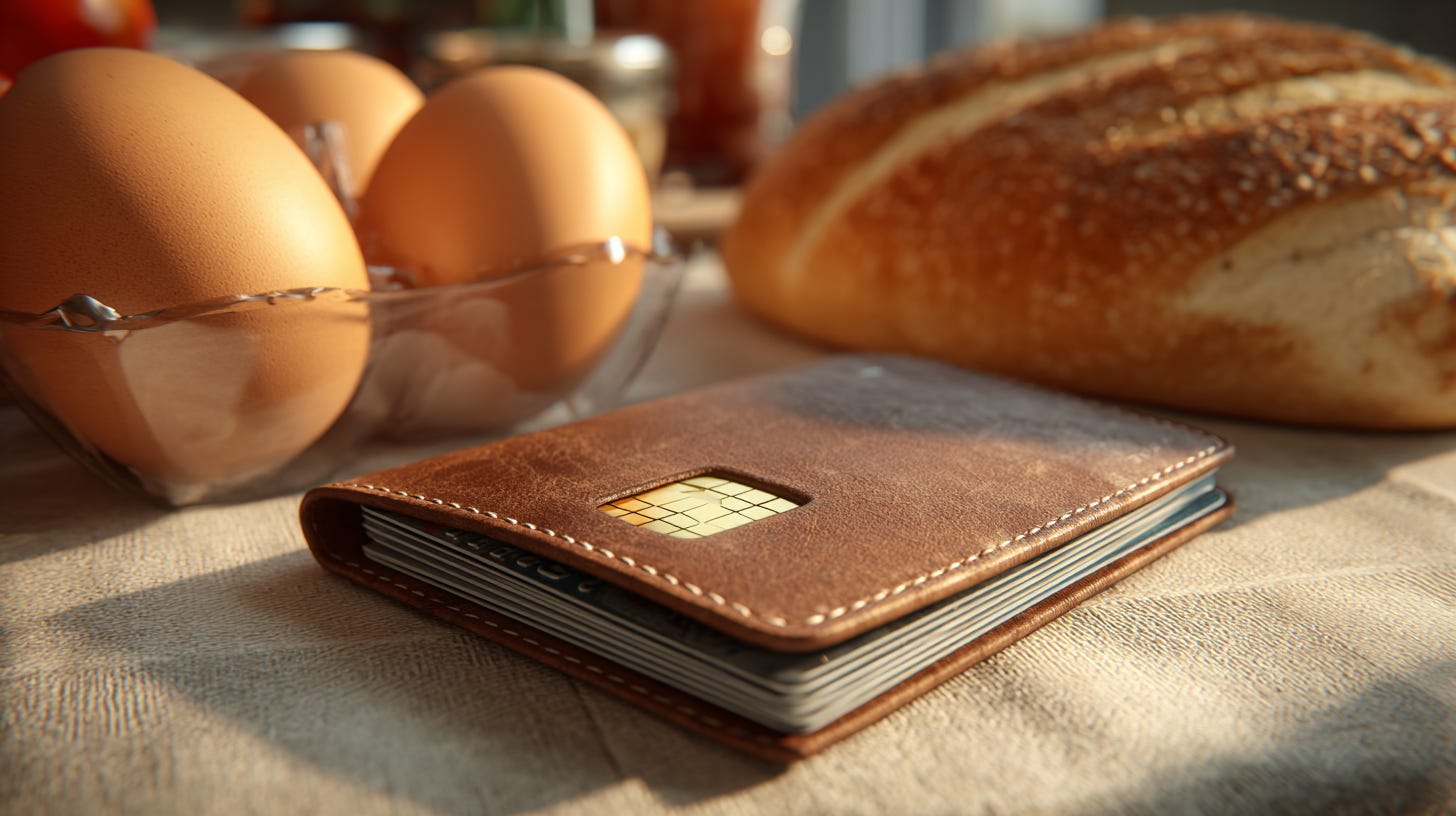
Spam isn’t the only thing getting more expensive…
Two weeks ago, I was staring at my credit card app on my phone, thumb hovering over the “Pay Minimum” button.
It wasn’t a big bill.
Just groceries, gas, and topping up my kiddo’s school lunch account.
Life stuff. Normal stuff.
The kind of stuff you shouldn’t feel guilty for buying.
But there I was — heart racing over $231.27.
Because here’s the math the app didn’t show:
$231.27 today…
means paying interest for the next six months.
Means sacrificing dinner out with my son.
Means shifting money around to make sure the lights stay on.
Not for some reckless splurge.
Not because I’ve been irresponsible.
But because the price of staying alive keeps going up.
And as I stared at that balance, something clicked:
The system isn’t punishing bad decisions.
It’s punishing existence.
Groceries, medical care, utilities — survival is the new luxury category.
That’s what this post is about.
Not money management.
Not “cut the lattes and avocado toast.”
And definitely NOT shame.
This is about the Credit Card Survival Trap: a quiet mechanism designed to make sure we never get ahead.
When Debt Isn’t a Choice Anymore
We’ve reached a point where using a credit card isn’t a sign of overspending — it’s the cost of survival.
Groceries go up. Rent goes up. Gas goes up.
Paychecks? Not so much.
So we swipe.
Not for luxuries — but for milk, eggs, prescriptions, utilities.
And then the bill arrives.
29% APR.
$82 minimum due.
A payment that mostly feeds the bank, not the balance.
This isn’t a “bad budgeting” problem.
This is an economic trap — one designed to keep us paying forever.
Because here’s the quiet part nobody says out loud:
When you punish people for surviving, you keep them obedient, exhausted, and always one emergency away from crisis.
Take a look at any red state and tell me it isn’t so.
Credit cards have become the survival tax:
We get charged extra for being broke.
We get penalized for trying to make it through the month.
We carry shame for doing what we’re forced to do.
And financial shame is one of the most powerful control tools ever invented.
What Can We Do?
We can’t fix the system overnight. But we can stop playing by its rules.
There are quiet ways to break the trap:
Reduce interest without sacrificing groceries
Restructure payments so balances actually move
Create breathing room between now and the next crisis
Not hustle culture. Not toxic discipline. Not “cut the lattes.”
Real strategies for real life.
I put the most important ones into a guide I built for myself — and then realized others needed it too:
👉 Debt Collapse Toolkit
A simple, no-shame plan to get free from the survival tax.
We all deserve to build a future where every dollar doesn’t feel like a punishment.
The Moment Everything Clicks
I keep coming back to that moment — staring at my phone, debating whether I could afford to pay more than the minimum.
It sounds ridiculous when I say it out loud.
But when survival costs money we don’t have, every tiny choice feels like a crisis.
That’s the part nobody talks about:
It’s not the debt itself that wears us down.
It’s the constant pressure of choosing what gets paid and what gets pushed.
Groceries or co-pay?
Gas or school lunch account?
Minimum payment or mental stability?
Those choices pile up.
They chip away at hope.
They make a future feel like something other people get to have.
But here’s what I’ve learned: The system relies on us staying overwhelmed. It relies on us believing the lie that debt is a personal failure.
When we stop believing that?
The trap starts to weaken.
And that’s why I put together the Debt Collapse Toolkit — not to sell a magic fix or pretend this is easy, but to give us a way to take back even a small bit of control.
One manageable step.
Then another.
And another.
Until one day, the balance actually goes down… and the pressure lifts enough to breathe again.
We’re not out of the trap yet.
But we’re not powerless either.
💬 If you’ve got a moment that made you think, “this is absolutely ridiculous,” I’d love to hear it. Not because misery loves company — but because naming the problem is how we start breaking it.
— Robert